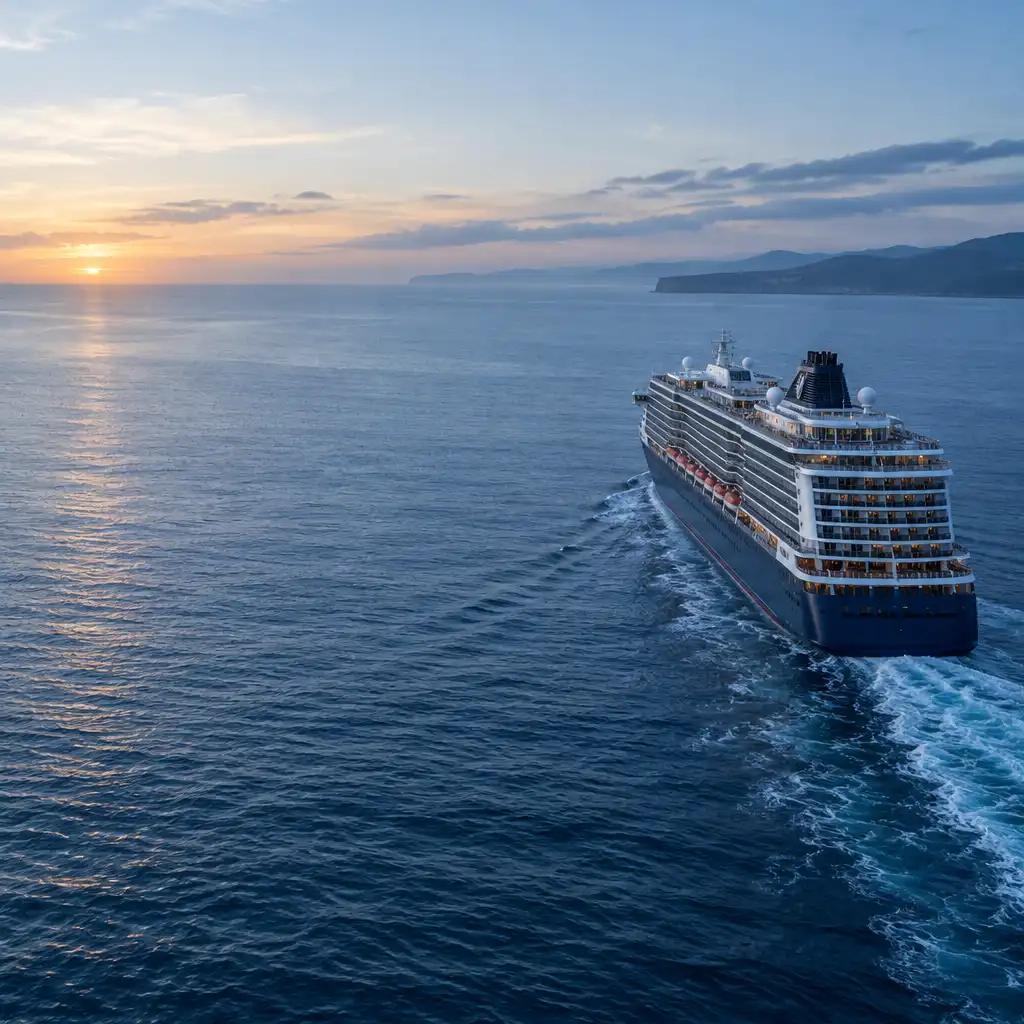
GEORGIOS DIMOSTHENIADIS is an independent English-language guide for comparing ocean cruise departures from Sydney Harbour, Brisbane River, Melbourne Station Pier and Fremantle. Start with the harbour that works for you, then read the route character, season and sea-day pattern before looking at live options.
Built for first-time cruisers and experienced sea travellers alike, this page helps you separate a promising route idea from the practical details that shape an individual sailing.
Australian departures do not all travel in the same direction or at the same time. Comparing the departure point first helps narrow the route families worth investigating.
SYD / Harbour departure
Sydney Harbour
Sydney is a prominent departure point with a harbour-led start to the sailing and a broad mix of coastal, South Pacific and New Zealand-oriented possibilities, depending on season and operator. The harbour experience is part of the occasion, but berth, direction and voyage length vary.
Use current listings to check the actual dates and itinerary sequence rather than assuming a particular route is available from Sydney.
BNE / River departure
Brisbane River
Brisbane is a practical Queensland starting point for travellers considering tropical coastal and island-focused cruising, including voyages that may head toward the Great Barrier Reef or South Pacific. A river departure can add its own timing and transfer considerations.
Check each sailing’s route and port sequence carefully; tropical themes do not mean every itinerary follows the same pattern.
MEL / Station Pier
Melbourne Station Pier
Melbourne Station Pier provides a southern departure context for Tasmania, New Zealand and selected longer coastal voyages. Its climate and sea profile can feel distinctly different from a tropical departure, especially when the route spends time in southern waters.
Review seasonal conditions alongside the sailing details, rather than treating a destination name as a complete planning guide.
FRE / Western gateway
Fremantle
Fremantle is Western Australia’s gateway for Indian Ocean, coastal and expedition-style planning, including Kimberley-focused voyages where schedules and embarkation arrangements vary. It is separate from northern Kimberley embarkation contexts and deserves its own comparison.
Long distances and seasonal operation can shape the planning, so use current listings to confirm the individual sailing.
Route families at a glance
Choose the voyage character, not just the headline
These route themes are useful comparison lenses. They are not fixed schedules, and individual sailing descriptions remain the source for current port order and operating detail.
01
Great Barrier Reef
Reef-oriented voyages are tropical coastal itineraries valued for warm-water scenery, island and shoreline experiences. Their useful planning focus is weather, port conditions and the exact calls shown for a sailing, because route structure can vary considerably between departures.
Route focusTropical coast
02
South Pacific islands
South Pacific itineraries may include Fiji, Vanuatu and New Caledonia, combining island-port rhythms with meaningful time at sea. No country appears on every route, so compare the crossing pattern, port order and seasonal context as carefully as the destination list.
Route focusIsland crossings
03
New Zealand fjords
New Zealand-focused cruises can centre on dramatic fjords and changing coastal scenery. They reward travellers prepared for cooler, changeable conditions and the possibility that scenic cruising or port arrangements may be adjusted by circumstances.
Planning cueScenery / cooler
04
Tasmania
Tasmania offers a southern voyage theme with a distinct cool-water character and potential for shorter coastal possibilities. It suits travellers looking for a more temperate Australian cruise feel, while the exact duration and route sequence should always be checked.
Route focusTemperate coast
05
Kimberley coastline
The rugged Kimberley coastline is a remote coastal journey where expedition-style expectations, seasonal conditions and detailed preparation matter more than a standard port-hopping template. Embarkation arrangements and cruise patterns differ between operators, so patience and careful reading are essential.
Planning cuePlan flexibly
Reading the southern hemisphere calendar
Use season as context, not a guarantee
Australia’s coastline spans different climates and ocean conditions. Compare the actual date, direction and balance of sea days rather than relying on a broad seasonal label alone.
Summer / tropical planning
Warmth needs preparation
Warm-season tropical and island cruising can bring heat, humidity and changing weather patterns. Check the individual sailing’s terms and updates, and allow for conditions to influence the day-to-day feel of a voyage without assuming a particular outcome.
Autumn transition
Compare actual dates
Autumn can be a transition period where conditions and route availability vary. It is useful to compare dates, direction of travel and time at sea rather than declaring one season universally better for tropical or southern routes.
Winter / southern voyages
Pack for variability
Journeys toward Tasmania, New Zealand or southern waters call for layers and flexible expectations. Conditions can be brisk or changeable, while dramatic fjord scenery remains subject to the individual itinerary and circumstances.
Spring transition
Read beyond the label
Spring is another changing period across Australia’s large coastline. Examine the departure date, destination, sea days and packing needs instead of expecting a single seasonal description to answer every practical question.
Sea days, swell and voyage character
Ocean conditions are part of the itinerary
Sea conditions vary. Motion, wind and swell can affect how a voyage feels even when a ship’s schedule proceeds as planned. First-time cruisers can use this as a reason to consider sea-day counts and personal comfort, not as a reason to expect certainty.
Conditions vary During a sailing, shipboard announcements and operator guidance take precedence over general planning information.
Tropical and island crossings
Open-water rhythm
Tropical and South Pacific passages toward Fiji, Vanuatu or New Caledonia can include open-water days where warmth and changing weather shape comfort and activity plans. Tropical settings do not automatically mean calm seas, so review route length and sea-day count.
Southern waters
Cooler and exposed
Routes around Tasmania and toward New Zealand can feel cooler and more exposed. Layers, flexible expectations and a realistic approach to sea conditions are sensible, whether the itinerary includes scenic fjord cruising or port days.
Remote coastlines
Plan flexibly
Kimberley-style planning benefits from patience because remote coastal travel is shaped by conditions, access considerations and the individual sailing’s detailed terms. Review the current itinerary information rather than relying on a generic route description.
A sea day changes the pace of an itinerary as much as a destination does.
Onboard rhythm
Scenery, sea days and time ashore
Sea days are not merely gaps between ports. They create time for dining, entertainment, lounges, deck spaces and onboard activities, while changing the overall rhythm of the route. GEORGIOS DIMOSTHENIADIS covers those wider onboard subjects, but each vessel’s facilities should be checked individually.
Consider whether your group prefers an active port pattern or enough time aboard to settle into the ship and enjoy the passage.
Scenic cruising
A scenery-led day, such as a general New Zealand fjord context, emphasises coastlines or fjords viewed from the ship. Weather and circumstances can affect the experience.
Port calls
A port day is built around a scheduled destination stop. Read the itinerary wording to understand the balance between time ashore and time at sea.
Match your group
Families, adults, solo explorers and social cruise groups can weigh consecutive sea days, cabin downtime and shared interests before choosing a route.
Build a sensible shortlist
A comparison method before you search
01
Start with the departure point
Compare the practical cost, timing and convenience of reaching Sydney, Brisbane, Melbourne or Fremantle before assuming the closest destination is automatically the best fit for your own circumstances.
02
Read the route sequence
Look beyond the headline destination and compare port order, number of sea days, scenic days and the balance between time aboard and time ashore.
03
Check the seasonal context
Use the departure date to consider warmth, cooler southern conditions and changeable weather rather than relying on destination names alone.
04
Decide how much sea time suits you
Assess whether you want busy port days, a slower sea-day rhythm or a blend when comparing tropical island crossings, southern passages and remote coastlines.
05
Review the sailing’s own details
Finish by checking the current itinerary description, departure date, included destinations and relevant operator information for the sailing you are considering.
Australian cruise finder
Compare current sailing options
When you have considered homeport, route family, season and voyage rhythm, open the Australian cruise finder to explore and compare available Australian departure dates and itinerary options. The finder opens in a new tab.
Check individual sailing Availability, port sequence and conditions can vary; review the listing for the voyage you are considering.
Frequently asked itinerary questions
Practical questions before comparing
Departure ports vary by sailing and operator. This guide focuses on Sydney Harbour, Brisbane River, Melbourne Station Pier and Fremantle as major homeport contexts, but the specific departure point should be checked in the finder for every sailing you compare.
Conditions vary: Fiji, Vanuatu and New Caledonia voyages are associated with tropical settings, but weather and sea conditions should not be assumed from destination names alone. Check the date, route pattern and sea-day balance for the sailing under consideration.
Port day
A scheduled destination stop designed around time ashore.
Scenic cruising
Viewing a coastline or fjord from the ship.
New Zealand fjords are one general scenery-led example. Read each itinerary’s wording closely, as conditions can affect views, access and the day’s operation.
Examine the precise sailing description, departure arrangements, season, route sequence and practical flexibility needed for remote coastal travel along the rugged Kimberley coastline. Current listing verification matters more than assumptions about expedition features or port patterns.
Plan by route, then compare dates
A practical final route check
Choose a realistic departure point, decide between Great Barrier Reef, South Pacific, New Zealand fjords, Tasmania or Kimberley coastline themes, then weigh season, sea days and the individual sailing details. The strongest shortlist is one that matches the pace and conditions you are prepared for.