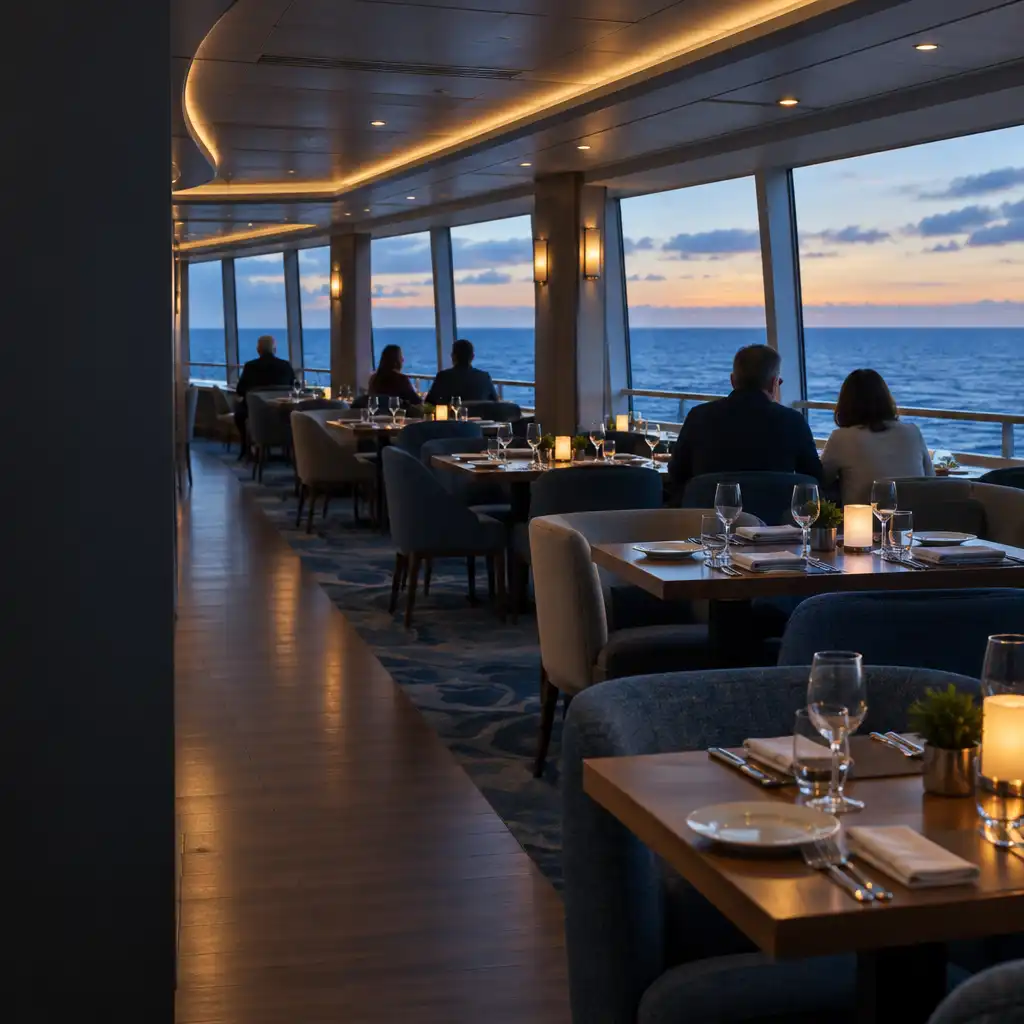
Contemporary cruise ship sailing across deep blue water off the Australian coast at blue hour

Independent cruise intelligence

Ship reviews for Australian cruise planning

GEORGIOS DIMOSTHENIADIS is an independent English-language Australian cruise portal built for the questions that matter once a brochure has finished selling the view. Our ship reviews look at how cabins feel in daily use, where people gather, how dining fits into the day, what entertainment is available and how easily a vessel can be read and navigated.

We cover ship and cabin reviews, dining, onboard lifestyle guides, deck plans, itineraries, entertainment and cruise destinations for first-time cruisers and experienced sea travellers alike. Use the guidance beside your preferred route, voyage duration and departure date; the most suitable ship is rarely a one-size-fits-all choice.

Explore Australian Cruise Sailings

Compare Australian departures and itineraries once you know which onboard details deserve your attention. Opens in a new tab.

Cabins & suites
Layout, location and daily comfort.
Dining & spaces
Rhythm, venues and public flow.
Life onboard
Services, activities and entertainment.
Port-day planning
Embarkation and excursion context.

Route origins

Begin with where you sail from

Ship availability, date options and itineraries vary by Australian departure city. A useful review decision therefore starts with the port you can realistically use, then connects that practical starting point with the ship experience you want. Read the review, then check current sailing availability rather than assuming every vessel or route appears from every city.

Origin 01

Sydney

Sydney is a covered departure city. Use its current departures as a starting point, then compare relevant vessel reviews, available dates and itineraries in the finder before deciding which sailing suits your plans.

Check Sydney departures ↗

Origin 02

Melbourne

Melbourne is another covered planning origin. Departure convenience and ship suitability are separate decisions, so read the onboard guidance first and test it against the current Melbourne schedule when you compare routes.

Check Melbourne departures ↗

Origin 03

Brisbane

Brisbane is a covered departure city. Treat current dates and itineraries as the evidence for what is available, rather than inferring a year-round pattern from a ship review.

Check Brisbane departures ↗

Origin 04

Fremantle

Fremantle is also part of our Australian departure coverage. Pair the review details that matter to you with current departure dates and itinerary options before making a shortlist.

Check Fremantle departures ↗

Read the ship, not the brochure

An independent review makes the ship’s everyday patterns visible, so you can weigh practical trade-offs alongside the appeal of a destination.

Cabins and sleep

Cabin coverage considers category differences, usable layout, storage, noise considerations and the relationship between location and daily convenience. Rather than assuming one cabin is universally quiet or spacious, we encourage readers to connect the room with nearby routes and deck-plan context.

Dining and daily rhythm

Dining guidance looks at venue choice, service rhythm, reservation pressure and how meal times can shape the wider onboard day. It places practical dining decisions within the lifestyle of the voyage, without assuming unnamed ships share the same venues, costs or booking rules.

Public spaces and guest flow

Decks, lounges, pools, theatres, lifts and corridors matter beyond their photographs. They influence crowding, navigation and where different travellers may feel comfortable. Flow can change with itinerary, weather and passenger mix, which is why deck plans and layout reading remain useful context.

Service and operational touchpoints

We consider the practical places passengers need, including guest service desks, medical centres, embarkation sequences and shore-excursion meeting arrangements. Their location, hours and procedures should always be confirmed for the specific sailing; this is general planning context, not medical or operator instruction.

Entertainment and evening context

Coverage considers theatres, live-music venues, lounges, bars and deck events as part of a ship’s evening atmosphere. Venue access, performance times and the mix of activities can vary by vessel, itinerary and daily programme, so the review describes the setting rather than promising a particular show.

Match the journey

Use the review through your own travel style

Use the same ship review differently depending on how you want to move through the day. These lenses help you identify useful evidence without assigning any traveller, or vessel, to a fixed category.

First-time cruisers

Prioritise navigation clarity, cabin-location confidence, boarding expectations, dining routines and where to seek assistance once onboard. Reading deck plans and everyday logistics early can make the ship feel familiar without making a first cruise feel daunting.

Families and social groups

Look closely at cabin adjacency or arrangement needs, activity distribution, meal coordination, meeting points and the time needed to move a larger party around the ship. Group arrangements and availability need confirmation with the relevant booking provider or cruise line.

Adults seeking slower onboard time

Use the review to compare quieter spaces, dining rhythm, entertainment choices and the balance between port days and sea days. This is a preference lens, not a claim that any vessel is adults-only or that one style of holiday fits everyone.

Solo and experienced sea travellers

Circulation, public-space usability, cabin trade-offs, day-to-night atmosphere and itinerary fit can reward closer reading. Experienced travellers may compare service routines and layout details closely, while solo travellers can choose their own preferred level of social activity.

The practical ship systems behind the holiday

A ship is a moving public space. Lifts, stairs, wayfinding, meeting points and service counters connect accommodation, venues and port calls, influencing how effortless the day feels. Layouts differ by ship, so a current deck plan remains the best companion to a review.

Cabin routes
Public spaces
Port return
Illustrative passenger-flow graphic, not a vessel deck plan.

Guest services

Guest services generally support account and onboard-query assistance. Placement, opening arrangements and processes vary by ship and sailing, so passengers should follow the information supplied onboard for their own voyage.

Medical centres

A ship’s medical centre provides medical care pathways. Its location and arrangements vary, and passengers should seek urgent help promptly and follow onboard instructions. This guidance is informational and does not replace medical advice.

Sailing-specific timing

Excursion and return-to-ship logistics

Reviews can help you anticipate meeting-point clarity, gangway flow and shore-day pacing, including tender context where it applies. The ship’s stated return time is the practical reference point. Excursion procedures are sailing-specific, so confirm the day’s arrangements and instructions onboard.

Pre-boarding orientation

Embarkation begins before the gangway

Use a review to identify likely orientation needs, then rely on current travel documents and operator instructions for check-in time, luggage, identification and port-specific arrangements. General review guidance can prepare you for the ship; official instructions govern the embarkation process.

Connect the room to the rest of the ship

Cabin location is part of the itinerary

An appealing cabin category still needs to be considered alongside its relationship to lifts, public decks, dining venues and the routes you will use repeatedly. Pair cabin guidance with deck-plan reading rather than treating the room as an isolated choice.

Dining is a timetable as well as a venue

Venue choice, meal times, reservation practices and sea-day rhythm can influence how easily you fit in shows, shore excursions or quiet deck time. Exact dining arrangements remain dependent on the ship and sailing.

Public spaces change character across the day

Read for transitions between morning, port return, showtime and late evening instead of evaluating a lounge, deck or entertainment space in isolation. Weather, itinerary and passenger mix can all alter use patterns. Explore Cabins & Suites and Dining Guides for deeper context.

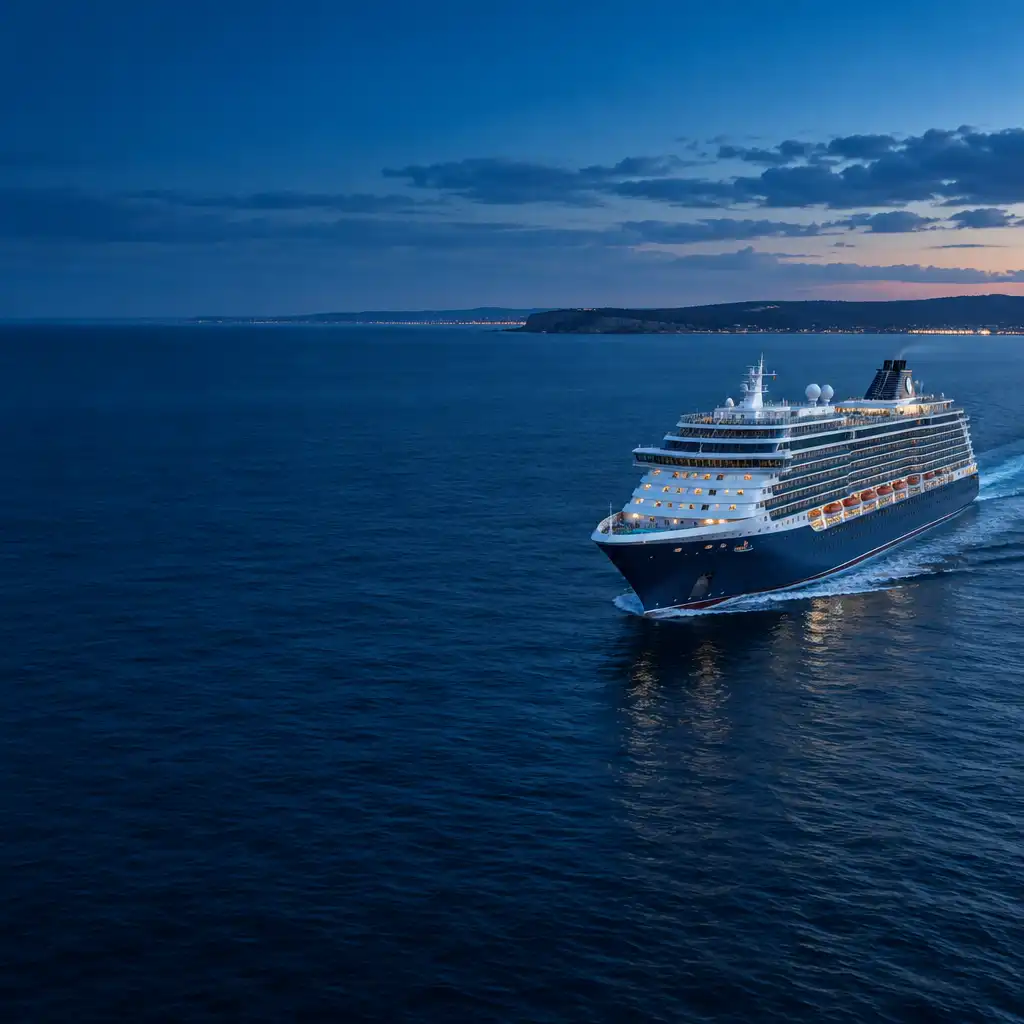
Modern cruise ship dining lounge with tables, large windows and a sea horizon at early evening

Evening context

Evening venues are part of the ship’s flow

GEORGIOS DIMOSTHENIADIS looks at entertainment as one part of the onboard day, not as a standalone attraction. A review considers the main theatre, live-music venues, lounges, bars, pool-deck events and the routes passengers use between them. Comedy, screenings, guest performers and family activities may also appear; the exact mix varies by vessel, itinerary and programme.

Read the evening as a sequence

Dinner, a show, a lounge and a late deck walk can compete for the same hours. A useful review shows how venues connect, where queues may form and whether a quieter alternative exists nearby. Confirm current times and access onboard rather than treating a published programme as fixed.

Comfort and choice

Not every evening needs a headline event

Some travellers want the main production, while others prefer live music, a quiet lounge or an early night. Both are normal ways to use a ship. Read our dining guides and cruise destinations guidance for the rest of the day.

Time-sensitive

Check what has changed before you sail

Refurbishment work, changed venue use, refreshed cabins, seasonal deployments and maiden Australian seasons can alter the practical experience described in older material. Independent planning means treating fleet information as current-aware context, not a permanent promise.

Read the review date and update note

Distinguish enduring observations about layout and guest flow from details that may change, and look for review-update context where it is provided. Cross-check those details with current sailing information instead of assuming a particular update cadence.

A maiden season needs itinerary context

A ship’s arrival in Australian waters is only one part of the decision. Examine its departure city, voyage duration, ports and your own priorities. Sydney, Melbourne, Brisbane and Fremantle remain useful route origins for that comparison.

Confirm the details that affect your booking

Check current sailing information and relevant operator materials for matters that can shift before departure, including venues, procedures, schedules and booking arrangements. GEORGIOS DIMOSTHENIADIS is an independent information and review portal; then compare dates and routes ↗.

Turn review notes into a workable shortlist

01

Choose your departure reality

Start with the Australian city from which you can depart most practically, then see which current sailings are relevant. Sydney, Melbourne, Brisbane and Fremantle are planning origins, not fixed availability promises.

02

Compare the ship experience

Use the review to identify cabin, dining, layout, activity and service priorities that genuinely affect your day onboard. Look for trade-offs rather than a universally best ship.

03

Place the ship against the itinerary

Compare voyage duration, departure date and itinerary alongside the onboard experience. A suitable ship is only one part of the holiday, and the route can materially change the decision.

04

Recheck time-sensitive details

Before booking, confirm current sailing information where venue arrangements, procedures, schedules or fleet updates may affect the choice. Then compare dates and routes with confidence.

Next route

Find a sailing that fits the ship

Take what you have learned about ship layout, cabins, dining, public spaces and travel style into your route search. Compare Australian departure dates and itineraries from Sydney, Melbourne, Brisbane and Fremantle, then weigh the sailing against the onboard experience that matters to you.

Explore Australian Cruise Sailings

GEORGIOS DIMOSTHENIADIS is an independent cruise information and review portal. Review guidance supports comparison, while sailing-specific details should be checked for the selected departure and date.