Dining intelligence / Australian departures

Dining at sea, decoded

GEORGIOS DIMOSTHENIADIS is an independent English-language Australian cruise portal for travellers comparing sailings from Sydney, Melbourne, Brisbane and Fremantle. Dining is central to life onboard, but the useful comparison is not simply restaurant numbers. It is what your fare includes, when each venue operates and whether the available rhythm works for first-time cruisers, families, adults, solo travellers and social groups.

Explore Australian Cruise Sailings

Compare the ship and fare together: included venues and dining choices can differ on each sailing.

01 / Fare logic

Read the fare before you read the menu

Use dining information as a practical fare check. What is available, included and convenient can vary by cruise line, ship, fare type, sailing and promotional conditions.

Route 01

The standard-fare baseline

Many cruise fares commonly include access to a multi-course main dining room and casual buffet-style food. Treat that as a starting point rather than a guarantee: venue lists, meal periods, menus, dining-room allocation and fixed or flexible seating can all differ. Check the current documentation for your selected ship and sailing before relying on a particular meal routine.

  • Which venues are named as included?
  • Which meal periods are confirmed?
  • How are dining times allocated?

Check before booking

Optional venues and premium menus

Chef-driven specialty restaurants, woodfire grills, sushi bars and seafood markets may carry a cover charge, selected-item pricing, a booking fee or package access depending on the ship. A reservation requirement is not automatically an extra charge, and some casual concepts may mix included items with premium choices. Read the actual venue terms rather than treating any category as universally paid.

Route 03

Drinks are a separate comparison

Water, tea, coffee, alcoholic drinks and premium non-alcoholic choices are handled differently across fares. Beverage packages can change the apparent value of a sailing, yet their eligible outlets, exclusions, service charges, limits and cabin-participation rules may vary. Estimate around drinks you genuinely expect to order, not an assumed saving.

  • Check eligible outlets and drink categories.
  • Review current package terms and exclusions.

The comparison rule: compare the fare, included venue list and likely drinks spend together—not in isolation. GEORGIOS DIMOSTHENIADIS is independent guidance; confirm current terms with the seller or relevant cruise line before paying a deposit.

02 / Service pattern

The dining room rhythm

A seated, multi-course evening

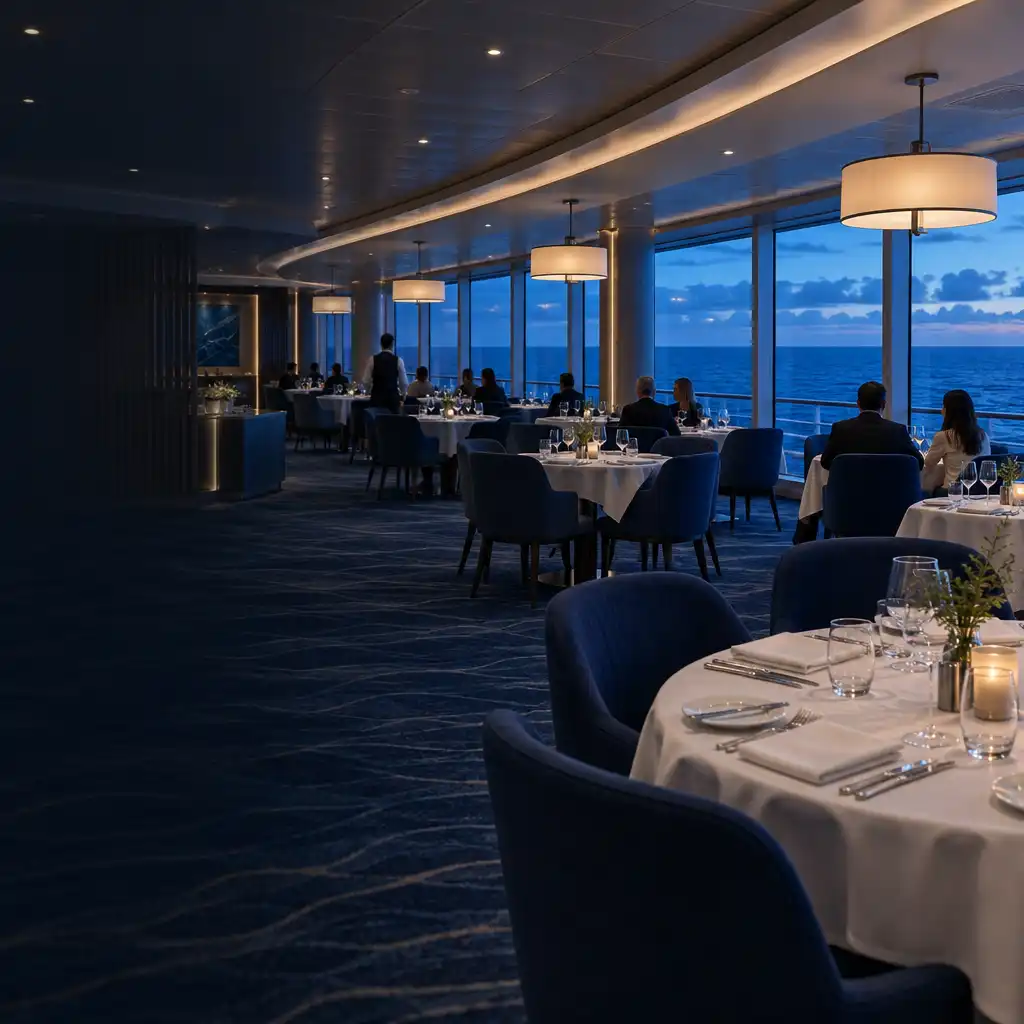
On many ships, the main dining room is the formal or semi-formal seated service hub. Guests commonly choose from a changing multi-course menu and are served at a table rather than collecting food from stations. The mood can be relaxed or more structured depending on the ship and evening. Dress expectations, menus, service formats and fare access vary, so it is worth investigating how the dining room works on the sailing you are considering.

Fixed, flexible and allocated seating

Assigned dining times, open dining windows and shared-table arrangements are different models, not universal standards. Preferred times can fill, so families and groups should ask about dining requests early. Solo travellers may value social seating options or independent table availability.

Timing
Ask whether a specific sitting, window or request process applies.
Table style
Check whether shared and independent seating choices are available.
Advance requests
Confirm how party size and preferred times are handled for the sailing.

03 / Casual dining

Fast, flexible and familiar: casual food on deck

The Lido buffet and casual spread

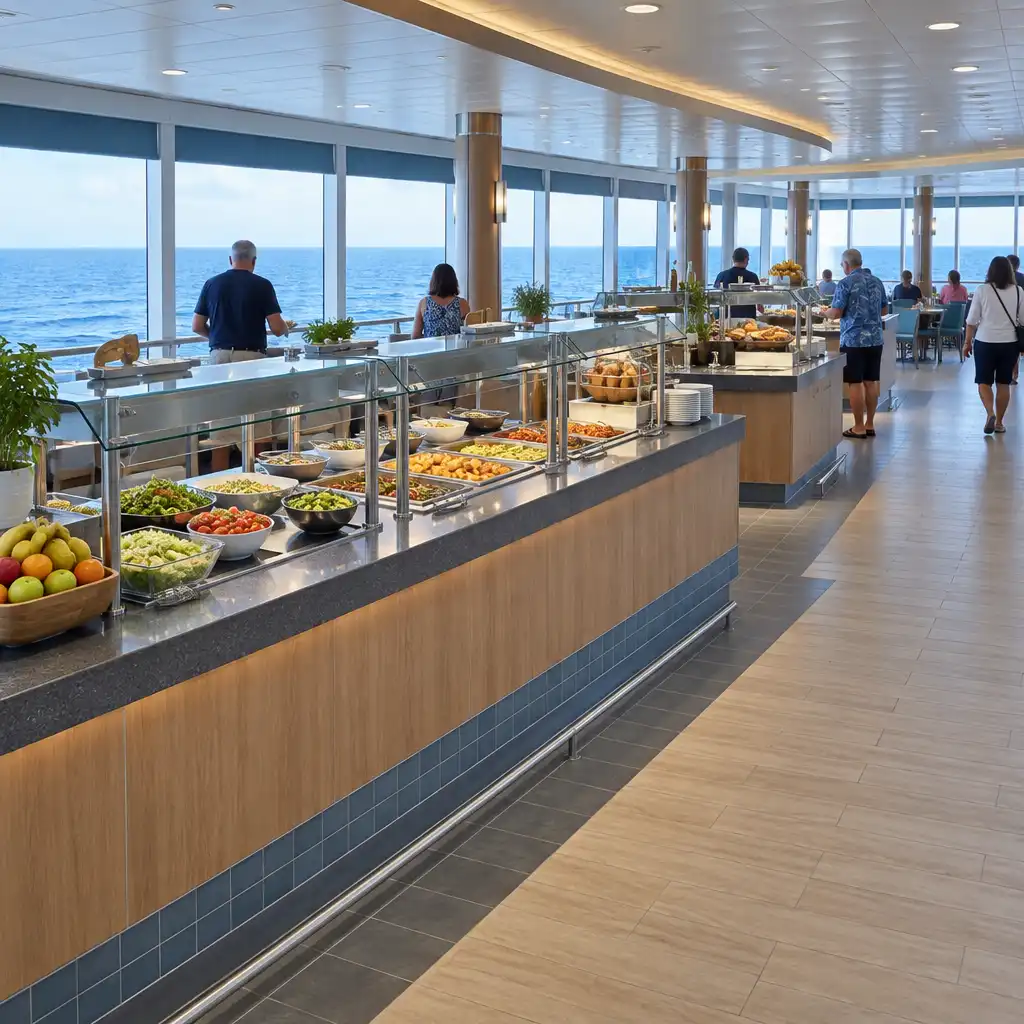
A Lido-style buffet is a common casual format where guests select food at service stations or counters. It can be useful for breakfast, lunch, quick dinners and changing shore-day schedules. Names, layouts, opening hours and food choices differ by ship, but the format can suit mixed-age groups or travellers returning from shore at different times. It should not be assumed to provide round-the-clock access.

Casual cruise buffet serving counters beside ocean-facing windows
Venue layout, service and opening periods vary by ship.

Peak times change the experience

Embarkation, sea days, show-time windows and popular breakfast periods can make casual venues busier. Arrive a little earlier or later where practical, look for alternate outlets and leave realistic time before an excursion. These are planning habits, not promises of a short queue.

A practical choice for different travel styles

Families: flexibility around changing appetites and timing. Groups: room for different routines. Independent travellers: a low-pressure meal. Many guests balance these advantages with a seated dinner on selected nights.

04 / Specialty options

Where specialty dining changes the night

Chef-driven specialty venues

Specialty restaurants may offer a more focused concept, intimate setting or chef-led menu than general included dining. Depending on the ship, access may be priced per person, by selected dishes or through an onboard arrangement. Consider the concept against your interests, cruise length and standard dining alternatives; premium does not automatically mean better for every traveller. Availability and reservation systems also differ.

Check charges

Woodfire grills

Woodfire-grill concepts centre on flame-cooked meats, vegetables or other grilled dishes, giving the menu and atmosphere a distinct feel from the main dining room. Check whether a cover charge, selected-item pricing or a booking applies to the ship under consideration.

Venue format

Sushi bars

Sushi bars can range from casual counters to dedicated specialty dining, with quick, social or sit-down formats depending on the ship. Made-to-order choices, set menus and pricing can differ. Guests with dietary requirements should ask onboard about preparation and ingredient information.

Ship-specific

Seafood markets

Seafood-market-style concepts can present coastal-style or counter-led seafood dining. Venue names, sourcing descriptions, charges and availability remain ship-specific, so review the menu and terms for the actual sailing rather than drawing conclusions from the label alone.

Make a booking decision, not a dining assumption. Reserve only when the concept genuinely matters to the trip, verify current charges and cancellation terms, and leave room in the schedule for included dining. Popular evening slots may be limited, particularly on shorter sailings.

05 / Beverage planning

Drinks, packages and the real cost question

Calculation / no assumptions

A package is a usage calculation

Beverage packages can be convenient for guests who expect to order eligible drinks regularly, but value depends on package rules, the drinks a guest actually chooses and time spent ashore. Consider sea days, port days and usual non-alcoholic as well as alcoholic orders. There is no useful general recommendation without the selected ship, fare and personal habits.

What to check in the terms

  • Included drink categories and any price caps or exclusions.
  • Eligible venues and service charges where applicable.
  • Purchase timing and shared-cabin participation rules where applicable.
  • Any daily, per-order or other stated limits.

Alternatives to a package

Paying as you go, choosing selected premium drinks, using included beverage options where available or keeping purchases for particular occasions can suit occasional or highly variable consumption. The right approach is personal and ship-specific, so check current terms before deciding.

Responsible choices apply at sea too. Alcohol should be approached responsibly, and onboard venue service policies apply. This guide supports travel planning; it is not encouragement to overconsume.

06 / Before departure

Plan for dietary needs and dining timing

Confirm early

Dietary requirements need advance confirmation

Guests with allergies, intolerances, religious dietary preferences or other dietary needs should check the selected cruise line’s current process before booking and speak with dining staff after boarding. Menus, ingredients, preparation areas and cross-contact procedures can vary. Advance communication is sensible, but it is not a guarantee of allergen-free preparation or accommodation.

Families and mixed routines

Families and groups can benefit from identifying casual options, dining-room timing, children’s menus where offered and the process for coordinating a larger table. Verify what applies to the ship. A mixed group may prefer alternating casual and seated meals instead of forcing one routine on everyone.

Port → return → meal → evening

Shore days, shows and reservations

Consider how port calls, tender timing where relevant, evening entertainment and specialty reservations fit together so dinner does not become a rushed obligation. Leave realistic travel and return-to-ship time. Scheduling flexibility and tender operations should always be confirmed for the actual itinerary.

The best question before paying: “Which dining venues, meal times and dietary-support processes apply to this ship, sailing and fare?”

07 / Daily rhythm

A week of meals is more than dinner

Build a flexible dining rhythm

A comfortable cruise dining plan can combine a quick breakfast before a port day, casual lunch around activities, a seated or specialty dinner on selected nights and simple drink choices that suit personal preferences. Actual service times and outlets vary, so this is a planning example rather than a ship schedule. Think in moments that support the itinerary, rather than trying to use every option.

  1. MorningChoose a pace that works before shore plans.
  2. Shore returnUse casual food when timing is variable.
  3. Evening mealReserve a seated or specialty occasion when it matters.
  4. Late onboard timeCheck actual outlet availability for your ship.
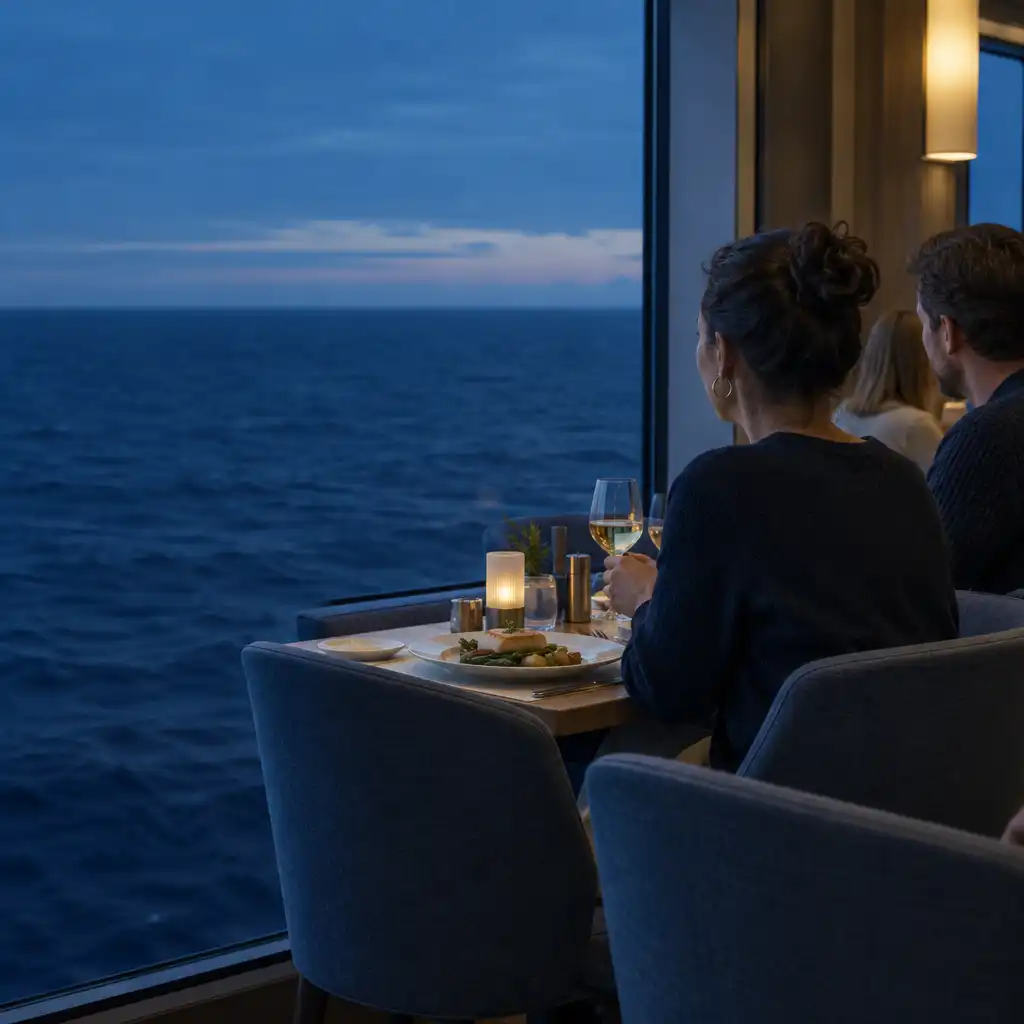
Relaxed cruise dinner beside a large ocean window at blue hour
Choose moments, not every upgrade. A specialty meal can mark an occasion, while included dining and casual choices can carry the rest of the voyage comfortably.

08 / Sailing comparison

Compare dining before you choose a sailing

01

Included dining rooms

Confirm which main dining rooms are included and how service times or allocations work.

02

Casual meal options

Look for practical food choices around shore days, activities and mixed routines.

03

Specialty concepts

Check the available concepts, charges and reservation terms for the actual ship.

04

Drinks approach

Compare included options, package rules and likely individual purchases together.

05

Reservation and timing rules

Ask how preferred sittings, group requests and popular evening times are handled.

06

Dietary-support information

Review the current process before booking and discuss needs again after boarding.

Departure date, port schedule and time at sea can influence when onboard dining matters most. Compare food planning alongside the itinerary when reviewing Australian sailings from Sydney, Melbourne, Brisbane and Fremantle; a venue list alone rarely explains the full onboard experience.

Continue to sailings

Put dining choices beside route and dates

Compare Australian departures and itineraries, then verify ship-specific dining and fare details before booking.

Explore Australian Cruise Sailings

Independent guide note

Independent planning, current terms

GEORGIOS DIMOSTHENIADIS provides independent cruise information. Onboard dining, venue access, menus, package terms and charges can change, and they can differ by ship, fare and sailing. Confirm current details with the relevant seller or cruise line before booking.

The best sailing is the one whose route, dates and onboard approach suit you—not the one with the longest venue list.