
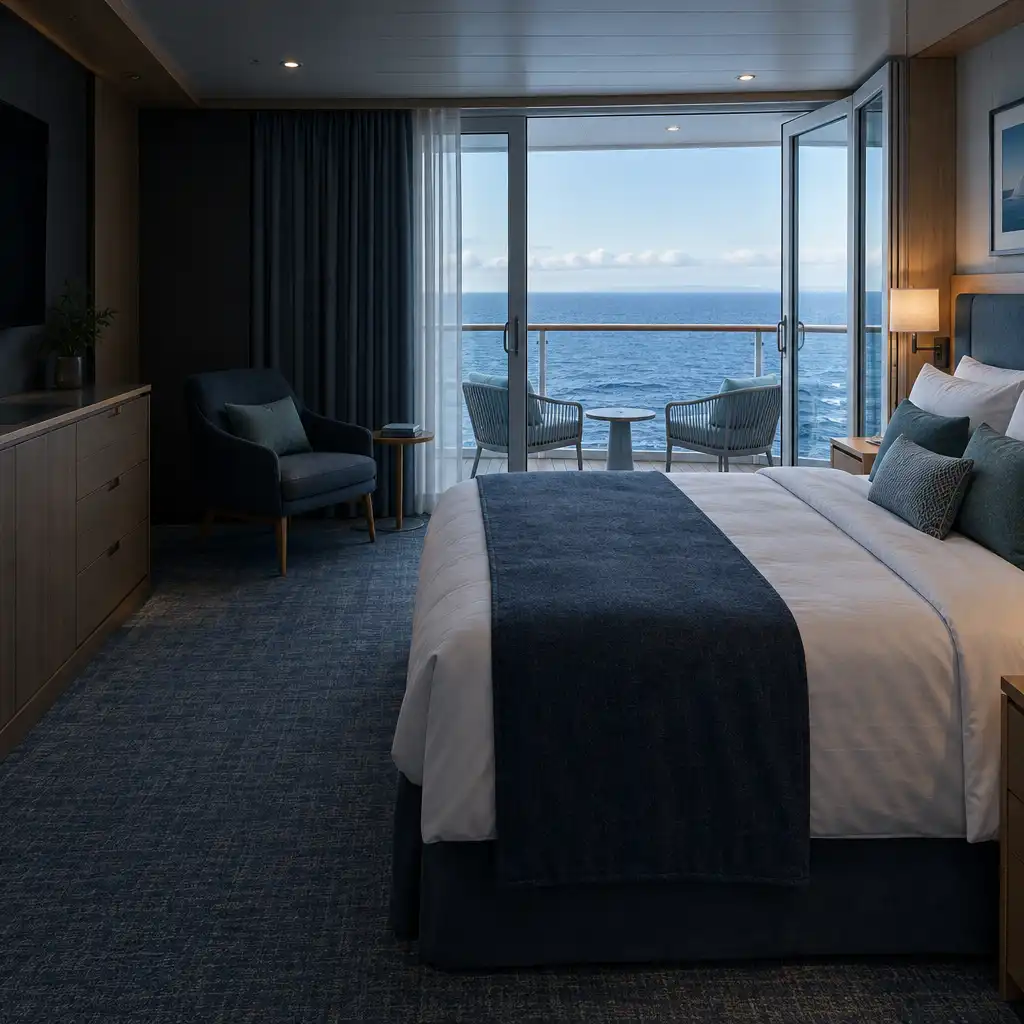
Modern cruise cabin with open balcony doors facing a calm ocean horizon

Cabin planning / Australian sailings

Cabin choice, made practical

GEORGIOS DIMOSTHENIADIS is an independent English-language Australian cruise portal for choosing where you sleep, recharge and spend quiet time at sea. This guide compares compact interior cabins, oceanview portholes, private verandah balcony rooms and multi-room suites without treating one category as best for everyone. Budget, itinerary, party size, time onboard and personal comfort all matter.

Explore Australian Cruise Sailings

Compare departure dates and itineraries once you know which compromises suit you.

Daylight
Do you need a window to feel oriented?
Outdoor space
Would you use a private verandah?
Separation
Do occupants need distinct living or sleeping space?
Location
Have you checked the specific deck and room plan?

Cabin labels are broad starting points. Exact layouts, inclusions and locations vary by ship and fare, so inspect the listing and deck plan before booking.

01 / Category baseline

The cabin categories at a glance

Use these categories to build a shortlist, then compare the individual room description. A familiar label can still cover different bed arrangements, outlooks and deck positions.

Interior

Compact interior cabins

Interior cabins are enclosed rooms without an external sea view. They can be a lower-cost base for travellers who expect full shore days, dining, shows and time in shared ship spaces. They also suit people who prefer to direct more of the trip budget elsewhere. Consider whether daylight and visual orientation are important to you before deciding that the saving outweighs the enclosed setting.

Works well when: the room is chiefly for sleep and reset.

Consider if: natural light matters to your routine.
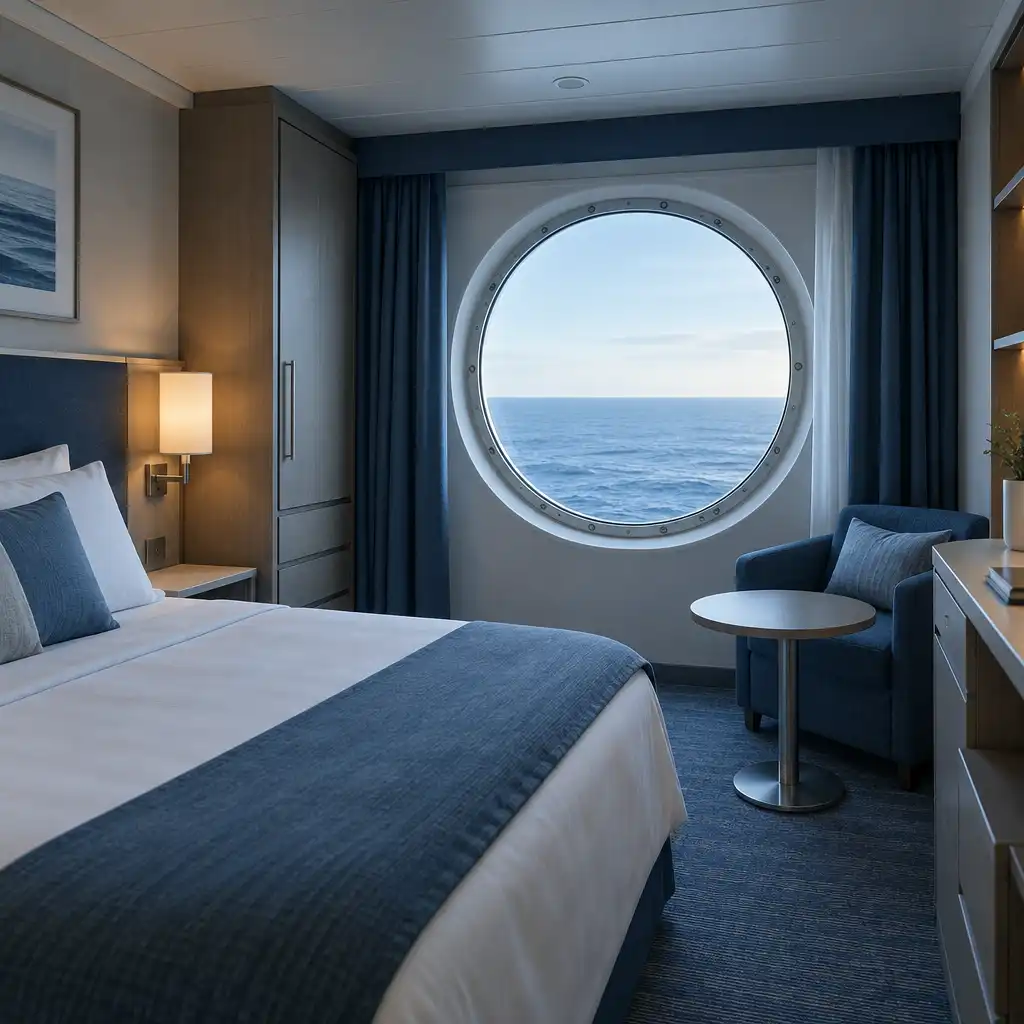
Oceanview

Oceanview porthole rooms

Oceanview cabins use a window or porthole to bring in daylight and a sea view without adding private outdoor space. They can be a useful middle ground for travellers who want a connection to conditions outside but do not need a balcony. Window style, size and outlook differ by ship and location, and some specific rooms may have a partially obstructed view, so read the individual listing closely.

Works well when: daylight is a priority.

Consider if: the stated view has any qualification.

Balcony / verandah

Private verandah balcony rooms

Balcony or verandah rooms add private outdoor space and direct fresh-air access, usually at a higher fare. They can be rewarding for scenic sea days or travellers who expect downtime in their room. The experience is shaped by balcony size, shade, wind, privacy and position on the ship, as well as weather. A balcony is a preference, not an automatic necessity for every itinerary.

Practical note Check privacy and position in the specific listing.

Suite

Multi-room suites

Suites are larger accommodation that may include separate living or sleeping areas, enhanced bathrooms, larger balconies or category-specific privileges. The exact layout and inclusions are not standard across ships, cruise lines or fares. Room separation can help families, groups and travellers spending more time onboard, but the word “suite” alone does not confirm what you receive. Inspect the exact plan and fare terms.

Works well when: usable separation is genuinely valuable.

Consider if: the stated inclusions justify the difference.

02 / Traveller fit

Choose by the way you travel

Cabin comfort is personal. Start with your routine, the people sharing your room and the amount of time you expect to spend ashore or onboard.

Start here

First-time cruisers and value-led planners

Think first about how many waking hours you expect to be ashore versus onboard. An interior or oceanview can leave more budget for the wider trip, depending on fare differences, without being a lesser experience by default. Check bed arrangement, cabin position and storage alongside the category. A sensible baseline is one that supports your actual routine rather than a feature you may barely use.

Families and shared cabins

For shared rooms, sleeping arrangements, bathroom pressure, storage, proximity and calm downtime deserve equal attention. Check whether beds, bunks, sofa beds or connecting-room arrangements are actually offered in the selected cabin. More space can improve comfort, but the exact plan matters more than the category name. Compare the room location with family-focused facilities on the deck plan.

Couples, adults and quiet-time travellers

An oceanview or balcony can appeal when in-cabin downtime, daylight or outdoor space matters to your trip. Cabin position can be as important as category when considering noise and privacy. Weather also affects how often a private balcony is used, so make the decision around your likely routine rather than an assumed perfect sea day.

Watch-out Check the room’s position, not just its category.

Solo explorers and social cruise groups

Solo travellers

Check single-occupancy pricing, practical storage and the stated bed arrangement. A private retreat can matter just as much as access to lively common areas.

Groups

Confirm cabin proximity only where the cruise line permits or can allocate it. Shared plans do not remove the need for each traveller to be comfortable with their own room choice.

03 / Deck-plan reading

Read the room location before the room name

Deck placement and nearby infrastructure can materially change how a cabin feels. Use the plan as an inspection tool, not a source of assumptions.

01

Position

Movement, motion and position

Some travellers prefer to consider cabin position when thinking about perceived movement, but individual experience differs. Sea conditions, ship design, cabin position and personal sensitivity all contribute to comfort. View the deck plan rather than assuming every cabin in one category will feel alike, and avoid treating any position as a guarantee.

02

Surroundings

Noise, traffic and service areas

Look above, below and beside a proposed cabin for theatres, dining spaces, pools, lifts, crew or service zones and busy public routes. Nearby facilities are not automatically disruptive, but they are worth checking. Compare the actual room position against the wider public-space layout before making it a final choice.

Above / below / beside

03

Outlook

Views, privacy and external structures

A sea-facing room may have a porthole, window, balcony, partial obstruction, shade or overlooked position depending on its exact placement. Read the individual room description and any stated view qualification. Balcony outlook and privacy can differ across the ship, even within one broad category.

Inspect listing language Treat any stated view condition as part of the decision.

04 / Room inspection

Inside the cabin: what to inspect

Category labels cannot answer every practical question. Use these checks when reading room listings, images and independent reviews.

Sleeping layout

Sleeping layout

Check the stated bed configuration and additional sleeping surfaces against the number and ages of people sharing the cabin. Bed arrangements can vary within a category. Consider access around beds, night-time routines and whether everyone needs a separate sleep surface.

Liveability

Bathroom and storage practicality

Inspect bathroom arrangement, storage imagery and written descriptions rather than assuming roominess from a category name. Luggage, wet-weather layers, formalwear and shared toiletries all take space. Exact fixtures and storage depend on the accommodation design.

Outlook

Window, balcony or view language

Treat view labels carefully. Check the room’s own description for obstruction, limited outlook or balcony conditions, then cross-check with the deck plan where available. Category-level marketing copy can be broad.

Read the individual listing

Access

Access needs and circulation

Travellers with mobility, sensory or other access needs should review the operator’s specific accessibility information and cabin details before booking. Do not assume a standard cabin meets particular requirements; confirm doorway, bathroom and route considerations where relevant.

Fare conditions

What is included with the fare

Separate the physical cabin from fare conditions and any category-specific inclusions. Dining, drinks, internet, priority services and suite privileges can differ by ship, cabin category and fare. Review the terms before treating a feature as included, even when a room description sounds comprehensive.

05 / Independent method

Cabin reviews with useful evidence

Useful cabin reviews look beyond attractive photographs to room layout, sleeping arrangements, storage, bathroom use, location context, noise considerations and balcony or window conditions where applicable. GEORGIOS DIMOSTHENIADIS covers ship and cabin reviews, deck plans and onboard lifestyle guidance with concrete observations and disclosed limitations. A specific room observation should be distinguished from a ship-wide claim.

How to read photographs and walkthroughs

Use images to understand proportions and fixtures while remembering that camera angle, cabin grade and configuration can change the impression. Check captions and room identifiers where supplied. A visual review should not make you assume every room in the category has an identical layout or view.

Editorial note

Independent comparison, not a sales script

Our role is to help readers compare practical trade-offs across Australian sailings, not declare upgrades essential. A fair review can identify compact circulation, restricted views or position concerns when relevant, while keeping claims conditional unless the exact accommodation was reviewed.

Browse ship reviews

06 / Sailing rhythm

A cabin decision for each kind of sailing

Your planned rhythm can change the value of daylight, outdoor space and separation. Compare the fit, rather than assuming one cabin type suits every route.

Time ashore / time onboard

Port-intensive short breaks

Travellers expecting busy port days and full evening programmes may place more weight on budget and a functional sleep base than daytime cabin space. Interior and oceanview categories are both worth comparing. Consider whether your own routine includes enough room time between activities to make a higher category worthwhile.

Oceanview cruise cabin with a window framing a calm morning sea

Daylight / outlook

Sea-day and scenic itineraries

Longer stretches onboard can make daylight, windows or private outdoor space more important for travellers who want a personal place to watch changing conditions. Weather, direction, privacy and the specific room position affect the experience. A balcony can be appealing without being required for scenic sailing.

Space / separation / inclusions

Longer voyages and special occasions

Longer stays can make circulation, storage, bathroom use and room separation more significant, particularly for multiple occupants. Compare oceanview, balcony and suite options around lived-in practicality rather than status. Check exact layouts and fare inclusions before paying more for a category.

The practical takeaway

The best category fits your routine

Carry your shortlist into itinerary comparison, then check room details after choosing possible sailings from Sydney, Melbourne, Brisbane or Fremantle.

Explore Australian Cruise Sailings

07 / Pre-booking sequence

Before you commit: a five-minute cabin check

Keep the comparison practical with five short checks before you move on to sailing dates and routes.

01

Confirm the exact room, not only the category

Start with the named cabin type, deck, room number where available and any stated view or obstruction wording. Category labels can cover different layouts and positions, so retain the exact details you compared.

02

Read the deck plan around it

Check the room’s relationship to public areas, service zones, lifts, stairs and exterior features before treating it as a final choice. The plan shows relative locations without proving a particular experience.

03

Match sleeping and access needs

Verify bed configuration, occupants, bathroom arrangement and any access requirements against exact cabin information. Where details are unclear, seek confirmation through the booking source rather than relying on photographs.

04

Terms matter

Compare the fare conditions

Separate accommodation features from what the selected fare includes, particularly when a suite or package appears to add benefits. Inspect the terms and category-specific inclusions before assuming anything is standard.

05

Then compare sailing dates and itinerary

Once your cabin shortlist is clear, compare Australian departure dates and itineraries from Sydney, Melbourne, Brisbane or Fremantle.

Explore Australian Cruise Sailings

08 / Cabin questions

Cabin questions worth asking

These answers are general guidance. Always verify the exact ship, room and fare details for the sailing you are considering.

Next step / Australian departures

Find a sailing that fits your cabin shortlist

Take your priorities—budget, daylight, balcony space, separation and location—into departure-date and itinerary comparison. Explore Australian sailings from Sydney, Melbourne, Brisbane and Fremantle, then confirm cabin details against the selected sailing’s listing.

Explore Australian Cruise Sailings